Nearly every other study destination we have written about this year ends with the same sentence: your file has to go to New Delhi. Estonia, Czechia, Slovakia, Bulgaria, Portugal, Greece — all of them. Then you look at the China student visa from Bangladesh, and the address is Banani. Not Delhi. Banani.
That single difference changes the shape of the whole plan for a Bangladeshi family. No Indian transit visa, no flights, no hotel, no praying for an appointment slot in another country. But an easy address does not mean an easy application, and a few of the things circulating on Bangladeshi consultancy websites about China are simply not what the Chinese Embassy in Dhaka publishes. This guide sticks to what the Embassy and the visa centre actually say.
Bangladeshi students studying in China for more than 180 days need the X1 visa. The Chinese Embassy in Dhaka requires a JW201 or JW202 form, the original admission letter, and — for self-funded students — a bank statement showing at least USD 2,500 per year of study. Applications are filed online at visaforchina.cn and submitted in person at the visa centre in Banani, Dhaka.
What visa do Bangladeshi students need for China in 2027?
If your programme in China runs longer than 180 days, you need the X1 visa. If it is 180 days or shorter — a semester exchange, a summer language course — it is the X2. The Embassy of China in Bangladesh sets this out plainly in its published notice on visa applications, and the split matters more than students realise, because the X1 is not the thing you finally live on. It is a one-time entry document that you convert into a residence permit after you land.
| Feature | X1 visa | X2 visa |
|---|---|---|
| Length of study | Over 180 days | 180 days or less |
| JW201 / JW202 | Required | Required |
| Admission letter | Original | Original |
| Residence permit | Yes, after arrival | No |
| Typical use | Full degree | Exchange, language |
Almost every Bangladeshi student reading this — bachelor's, master's, MBBS, PhD — is on the X1 track.
How much money must you show for a China student visa from Bangladesh?
For a self-funded X1 applicant, the Embassy's published requirement is a bank statement proving the applicant has at least USD 2,500 for each year of study in China. Students on a scholarship submit proof of the scholarship instead of a bank statement.
Read that number again, because it reframes everything. We have covered fifteen destinations on this blog, and the funds requirements have run from roughly EUR 10,560 a year for Estonia to CZK 115,810 for Czechia. China's published figure is around BDT 3 lakh at current rates — a fraction of the European bar. For a middle-income Bangladeshi family, that is often the difference between "we cannot" and "we can."
Verify before you apply. The USD 2,500 figure comes from the Embassy of China in Bangladesh's own notice on Chinese visa applications, dated 12 September 2025. One clause on that same page — a fingerprint exemption "before December 31, 2025" — has already lapsed, which tells you the page is not refreshed line by line. Treat USD 2,500 as the published minimum, not a comfortable target, and confirm the current requirement before you move money. Universities and the residence-permit stage will look at what you can actually live on.
Where do Bangladeshi students actually apply — Dhaka or Delhi?
Dhaka. This is the single biggest practical advantage China has over most of the budget destinations we have researched. The Chinese Visa Application Service Center in Dhaka sits at the 3rd Floor, Praasad Trade Center, 6 Kemal Ataturk Avenue, Banani. It works Sunday to Thursday, takes applications and payment from 9:00 am to 3:00 pm, and hands back passports from 9:00 am to 4:00 pm.
But there is a step most Bangladeshi consultancy pages skip entirely. Your application is filed online first, at visaforchina.cn, and it then goes through a preliminary review. That review returns one of a few results — approved, "to be modified", "supplementary documents to be provided", or "video interview to be scheduled". If you get the last one, you book a slot and attend an in-person interview at the Embassy before you can submit your passport.
So the honest version is: China is not a paperwork-only route. It is a Dhaka route with an interview possibility built into it.
What documents does the Chinese Embassy in Dhaka ask for?
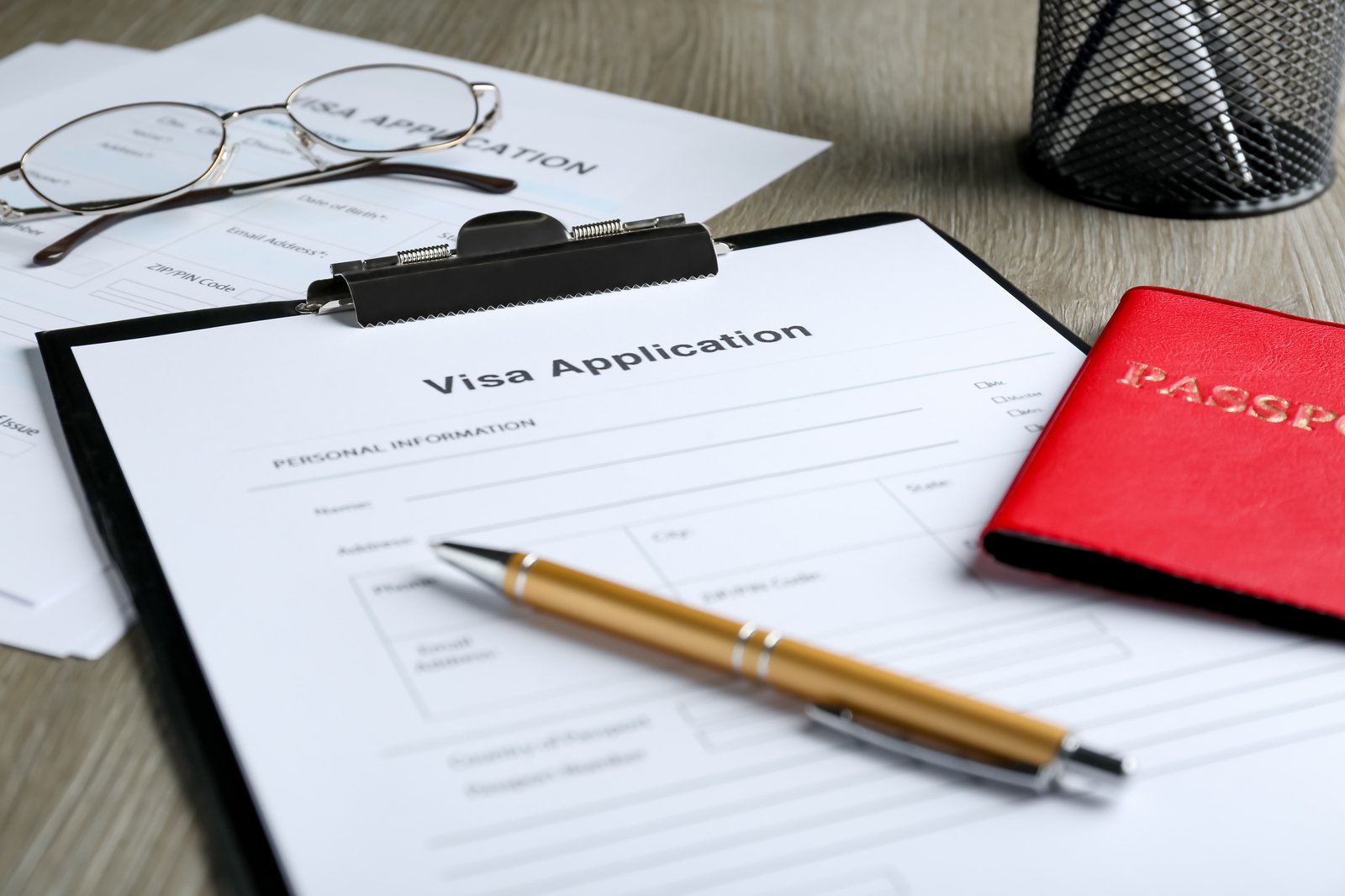
The Embassy's list for higher-education X1 applicants is short, which is exactly why people get it wrong — there is no padding to hide behind.
- Confirmation Form for Study in China — Form JW201 (scholarship students) or JW202 (self-funded), original plus a good-quality photocopy
- Original admission letter from the Chinese institution, plus a photocopy
- Proof of scholarship if you have one — otherwise a bank statement showing at least USD 2,500 per year
- Passport, completed online application form, and biometrics (fingerprints) taken at the visa centre
Note which two documents the Embassy specifies as originals: the JW form and the admission notice. Those must be presented at the visa centre counter. Everything else on the list may be submitted as copies.
The JW201/JW202 is issued in China, by your admitting institution, after your admission is confirmed and registered. You cannot download it, buy it, or speed it up from Bangladesh. If an agency tells you they can "arrange" a JW202 independently of a real admission, that is the moment to walk out of the office.
Does the apostille work for China?
Yes — and this is a genuine relief, because it does not for several European destinations. The 1961 Apostille Convention entered into force for Bangladesh on 30 March 2025, and for China on 7 November 2023. China did not object to Bangladesh's accession, so the convention operates between the two countries.
In practice that means your academic documents can follow the Bangladesh apostille route ending at the Ministry of Foreign Affairs e-apostille, rather than the older pattern of MOFA attestation followed by embassy legalisation. Compare that with Estonia, which objected and still forces Bangladeshi documents through the Bangladesh Embassy in Copenhagen — a step that costs students weeks.
Apostille policy is one thing; a specific receiving office is another. Chinese universities and provincial exit-entry bureaus can still ask for a document in a particular form or with a certified Chinese translation. Confirm what your admitting university wants in writing before you pay for attestation.
What happens in your first 30 days in China?
The X1 visa is not a residence permit. It gets you through the airport, and then a clock starts. Within 30 days of entry you must convert it into a student residence permit through the local Public Security Bureau's Exit-Entry Administration.
Can you work part-time as a student in China?
Barely, and not at all in your first year. This is where the "study and work in China" pitch falls apart.
China allows a narrow, school-supervised activity called Work to Support Study. To qualify you must have completed your first year of study, hold a study visa with at least six months of validity remaining, be over 18, have a clean record, and get your department's agreement. Only then does the university issue a consent letter, and only then can you apply to the Exit-Entry Administration for an annotation added to your residence permit. Work without that annotation is illegal work.
| Period | Per week | Per month |
|---|---|---|
| Term time | 8 hours | 40 hours |
| Winter / summer vacation | 16 hours | 80 hours |
| First year of study | Not permitted | Not permitted |
Eight hours a week, from your second year, with paperwork and insurance attached. It is a supplement to pocket money, not a way to fund a degree. Any consultancy telling a Bangladeshi family that a student will "cover their costs" working in China is describing something the rules do not permit.
What does the Chinese Embassy say about visa agencies?
This is the part we think every Bangladeshi family should read before they sign with anyone — including us.
The Embassy states that it "has not authorized, designated, or recommended any agency as an exclusive visa application service provider," and that if any agency or individual impersonates the Embassy for commercial visa services, "legal action will follow." It also tells applicants directly to "disregard rumors about application issues or inflated fees," and publishes a complaint address: dhaka@csm.mfa.gov.cn.
The Embassy goes further and sets deadlines that agencies must meet: supplement or correct materials within 3 working days of a preliminary rejection, submit passports to the visa centre within 2 working days of initial approval, and hand the visa to the applicant within 1 working day of collection. Agencies that miss those deadlines "will be suspended from submitting applications."
What we see at Eduvisa is that families rarely know these timelines exist, so they cannot tell a slow agency from a normal process. Now you can. If your file sits with someone for two weeks after approval, that is not how the Embassy expects it to work.
How do CSC scholarships fit into the plan?
China's scholarship system is the reason so many Bangladeshi students end up there. The Chinese Government Scholarship (CSC) is administered through campuschina.org and splits broadly into two routes: the bilateral programme, where the Chinese Embassy in Dhaka pre-screens and nominates candidates, and the university programme, where you apply to the institution directly.
Widely reported coverage includes tuition, on-campus accommodation, medical insurance and a monthly stipend — commonly cited at CNY 2,500 for undergraduates, CNY 3,000 for master's and CNY 3,500 for PhD students. Deadlines generally fall between January and April, with the embassy channel closing earlier than university channels.
Unconfirmed for the 2027 round. Stipend rates, coverage and deadlines are set fresh each cycle and vary by university and by the embassy channel. We could not verify the 2027 figures against campuschina.org at the time of writing, so treat the numbers above as indicative. Check the official portal and the Embassy's announcement for your intake before planning around them.
Chinese Ambassador to Bangladesh Yao Wen has been reported as saying that close to 20,000 Bangladeshi students are now studying in China. We could not verify that against a published government statistic, so we quote it as a reported figure rather than a confirmed one — but the direction of travel is not in doubt.
One number we could not read. The current visa fee schedule for Bangladesh is published by the Dhaka visa centre as an image, not as text, so we will not quote a taka amount we cannot cite. What we can tell you is the structure: your total equals the Embassy's visa fee plus the centre's own service fee, and the service fee moves with the exchange rate. Ask for the current figure at the counter and be sceptical of any quote that does not separate the two.
Related guides: Japan student visa from Bangladesh 2027 · Estonia student visa from Bangladesh 2027
This post is blog research for Bangladeshi students, not a promise that Eduvisa currently processes applications for China. Our processing service covers Malta, Italy, the UK, Malaysia and Cyprus. We publish country research because students ask, and because too much of what circulates about these routes is wrong.
Not sure whether your file is actually ready?
The China route rewards a clean, honest file and punishes a padded one — and no blog post can tell you which one you have. Bring your certificates, your bank papers and your shortlist to our office, and we will go through them with you properly, one document at a time.
Book Free Consultation →