Ask around in Bangladesh and you will hear that Portugal is the "easy" European country — cheap, warm, full of Bangladeshis, and forgiving if your papers are not perfect. That reputation was built on rules that no longer exist. Between October 2025 and May 2026 Portugal rewrote almost every part of its immigration system, and the parts it closed are exactly the parts Bangladeshi families were told to rely on. The Portugal student visa from Bangladesh 2027 route is still open and still affordable — but it is now a documents-first, embassy-first route, and it runs through New Delhi rather than Dhaka.
Bangladeshi students need a Portuguese national (type D4) study visa, applied for at VFS Global in New Delhi and decided by the Embassy of Portugal in New Delhi, which covers Bangladesh. The visa fee is EUR 90. You must first hold an Indian X-Double Entry visa to travel for submission. The Embassy of France in Dhaka handles only short-stay Schengen visas for Portugal, never study visas.
Can a Bangladeshi student actually get a Portugal student visa in 2027?
Yes — the route is real and it is one of the cheaper ways into Western Europe. But it is not a Dhaka process. For studies longer than one year you need a Portuguese national visa, category D4, which the official visa list describes as the residence visa for research, study, higher education and internships. For programmes between 90 days and one year, the category is a temporary-stay student visa instead.
The part almost no international website explains is the geography. Portugal has no visa-issuing embassy in Bangladesh. The Consular Section of the Embassy of Portugal in New Delhi holds jurisdiction over Bangladesh, Bhutan, Nepal, the Maldives and Sri Lanka, and it is the only office that can decide your study visa. Its own frequently-asked-questions page states plainly that people travelling to Portugal need a visa issued by its consular services and that documents and biometrics must be submitted at the VFS Portugal Application Centre in New Delhi.
Why do you need an Indian visa before you can apply for a Portuguese one?
This is the single most expensive detail to discover late, and it is the reason many Bangladeshi Portugal files collapse before they start. The Embassy of Portugal in New Delhi states that, according to information provided by the Indian authorities, Bangladeshi citizens applying for a national visa to travel to Portugal in New Delhi need a double-entry visa issued by the High Commission of India in Dhaka, in the X-Double Entry category, valid for a maximum of three months, with the stay in India not exceeding 15 days, and non-extendable. The embassy adds that VFS will only accept applications from Bangladeshi citizens who hold a valid Indian visa in that required category.
Read that sequence carefully. Before Portugal will look at you, India must let you in — twice, because the visa must be double entry: once to submit and once to collect. Your Portugal timeline is therefore built on top of an Indian visa timeline you do not control, and Indian visa issuance for Bangladeshi applicants has been slow and unpredictable in recent years. Any plan that does not start with the Indian visa is not a plan.
In Bangladesh, the Embassy of France in Dhaka represents Portugal — but the France-Visas government portal is specific that this representation covers short-stay Schengen visas only, alongside Austria and the Czech Republic. VFS Global's own Portugal one-pager repeats it: Bangladeshi applicants for Schengen tourism or business go to the Embassy of France in Dhaka, and are not authorised to submit those applications in India. Nothing in either statement covers study. A student who books a Dhaka appointment expecting to lodge a D4 there has booked the wrong thing.
How much does studying in Portugal really cost for a Bangladeshi family?
Portugal is genuinely affordable by Western European standards, and unlike EU tuition, non-EU fees are not capped by the state — each institution sets its own international rate. Published 2026/27 international undergraduate rates range from roughly EUR 1,300 a year at some polytechnic institutes to EUR 3,500–4,500 at universities such as the University of Algarve, with most public-sector bachelor programmes falling somewhere between EUR 2,500 and EUR 7,000. Polytechnics are consistently the cheaper half of the system, and they award the same licenciado (bachelor) degree as universities.
| Item | Amount | In BDT | Status |
|---|---|---|---|
| Study national visa | EUR 90 | ≈ ৳12,800 | Embassy fee list |
| Temporary stay visa | EUR 65 | ≈ ৳9,250 | Embassy fee list |
| Short-stay Schengen | EUR 80 | ≈ ৳11,380 | Embassy fee list |
| Refusal appeal | EUR 75 + taxes | ≈ ৳10,670 | Via VFS only |
| Tuition, public sector | EUR 1,300–7,000/yr | ≈ ৳1.85–9.96 lakh | Varies by institution |
| Subsistence benchmark | EUR 920/month | ≈ ৳1,30,900 | See warning below |
Money is where Portugal's paperwork is least forgiving. The rule is that you must prove means of subsistence measured against the national minimum wage. Portugal's minimum wage rose to EUR 920 a month on 1 January 2026 under Decree-Law no. 139/2025, with EUR 970 planned for 2027 and EUR 1,020 for 2028. Twelve months at the 2026 figure is EUR 11,040, roughly ৳15.7 lakh at early-September 2026 rates.
An official page that is out of date — verify before you budget. Portugal's own national-visa portal still states the subsistence benchmark as EUR 820, citing a 2023 regulatory decree and describing it as "currently in 2024". The minimum wage has risen twice since. Consulates in practice apply the current figure, and the 2027 figure will be higher again. Treat every amount in this post as an indication and confirm the exact sum the New Delhi mission is applying at the time you file. All BDT conversions here use EUR 1 ≈ ৳142.26 (2 September 2026) and are estimates that move with the exchange rate.
How do you get admission to a Portuguese university from Bangladesh?
Admission and the visa are two separate battles, and admission is the easier one. Portugal's Directorate-General for Higher Education (DGES) sets out the international-student route for anyone who is not a Portuguese or EU national and has not been legally resident in Portugal for more than two continuous years. The entry qualification it accepts is described broadly: a qualification giving access to higher education, meaning any diploma or certificate issued by a competent authority in the country in which it was awarded. In plain terms, a Bangladeshi HSC issued by a recognised education board qualifies you to apply. There is no Portuguese national entrance examination for international students.
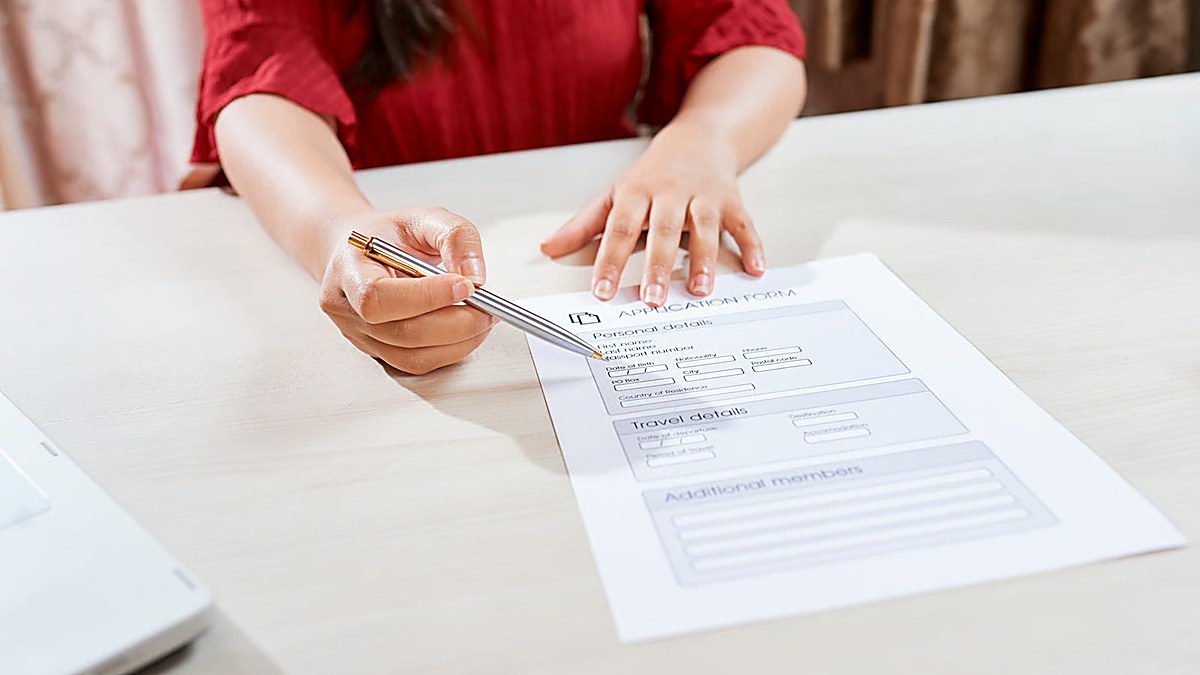
The catch is that there is no single national portal for you. DGES is explicit that all applications must be presented at the university or polytechnic the student wants to enrol at, and that each institution has different procedures, requirements, deadlines and documents depending on the study programme. Institutional international-student calls for a September start typically run in phases between spring and mid-summer, with application fees usually in the EUR 50–125 range — but because every institution publishes its own edital, the only deadline that matters is the one on your chosen institution's notice.
DGES runs the national information service for international students and points applicants to its portal at studyinportugal.edu.pt and to the address info@StudyInPortugal.edu.pt for questions. DGES itself is at Av. Duque D'Ávila 137, 1069-016 Lisboa. Its own advice is worth repeating: check the institution's web page or call its academic services, because that is where the fastest and most accurate answer sits. Cross-check any course you are offered against the official accredited-courses list before you pay anything.
Do Bangladeshi documents need an apostille, or something else?
Something else — and this is the second Bangladesh-specific trap. Bangladesh joined the 1961 Apostille Convention with effect from 30 March 2025, and for many countries a MOFA e-apostille is now enough. The Embassy of Portugal in New Delhi describes a different chain for the countries it covers. For India, it says apostille is sufficient precisely because both India and Portugal are Hague parties. For Bangladesh, Nepal, Bhutan, the Maldives and Sri Lanka, it says documents must first be authenticated by that country's Ministry of Foreign Affairs, then legalised by that country's own embassy in New Delhi, and only then submitted at the VFS office in New Delhi for Portuguese consular legalisation.
Practically, that means a Bangladeshi transcript may need to travel: education board, then Bangladesh MOFA, then the Bangladesh High Commission in New Delhi, then VFS Delhi. Only original documents can be legalised, and the request must be made by the document holder or a legal representative holding a power of attorney. Build weeks, not days, into this step.
Flagged as unresolved. The embassy page describing this chain does not state whether it predates Bangladesh's apostille accession, and we could not confirm from a Portuguese primary source whether Portugal accepts a Bangladeshi apostille in place of the legalisation chain. Because a rejected document set means a lost intake, ask the New Delhi consular section in writing which route it will accept for your specific documents before you spend money on either.
Can you work while studying in Portugal?
Yes, and the terms are reasonable. Non-EU students holding a study residence permit are generally permitted to work up to 20 hours a week during term and full-time during official university breaks, without a separate work permit. After arrival you convert your visa into a residence permit with AIMA — the Agency for Integration, Migration and Asylum, which replaced SEF — and you will need a Portuguese tax number (NIF) and a social security number (NISS) before you can be paid legally.
Two honest cautions. First, 20 hours at or near the minimum wage does not fund a degree; it supplements living costs, and any plan that treats part-time work as the tuition strategy will fail the subsistence test at the visa stage anyway. Second, the exact conditions are written onto your AIMA permit, so read the permit rather than a blog when you start job-hunting.
What happened to "go to Portugal first and fix the papers later"?
It ended. This is the most important paragraph in this guide for Bangladeshi readers, because a large part of Portugal's Bangladeshi community arrived under rules that have now been repealed, and the advice circulating in Dhaka has not caught up.
1. Manifestação de Interesse is gone. The regularisation pathway that let non-EU nationals enter as tourists, work, contribute to social security and later apply for residence was abolished on 31 December 2025. Applicants must now obtain the correct residence visa in their country of origin.
2. Irregular stay now carries a long bar. Since October 2025 the law states that illegal entry or overstay leads to visa refusal for up to seven years, where previously such refusals were discretionary.
3. The general job-seeker visa was withdrawn. In October 2025 it was replaced by a "highly skilled work-seeking visa" limited to specialised technical activities, granting 120 days extendable by 60, valid for Portuguese territory only, with a one-year wait before reapplying if no job is found. As of the most recent professional analysis we could source, implementing regulations were still outstanding and applications could not yet be submitted.
Alongside these, Portugal's nationality rules were amended so that naturalisation applications submitted on or after 19 May 2026 require seven years of residence for EU and Portuguese-speaking-country nationals and ten years for everyone else, replacing the previous five-year standard. Bangladesh falls in the ten-year group. Family reunification also now requires the sponsor to have held legal residence for at least two years, with limited exceptions.
Verify before relying on any of this. These reforms are recent, several were litigated at the Constitutional Court during 2025–2026, and implementing regulations for the replacement work-seeking visa were still pending at our last check. The summary above reflects published legal analysis rather than a document we could open on a Portuguese government site. Anyone making a decision that depends on citizenship timelines or post-study work should get it confirmed in writing.
What does a realistic timeline for a 2027 intake look like?
What are the most common mistakes Bangladeshi applicants make?
- Booking a Dhaka appointment for a study visa, when Dhaka only handles short-stay Schengen for Portugal.
- Leaving the Indian X-Double Entry visa until after the Portuguese admission letter arrives.
- Budgeting against the EUR 820 figure still shown on the official visa portal rather than the current minimum wage.
- Assuming a MOFA apostille alone will be accepted, without asking New Delhi first.
- Sending a relative or agent to submit the file — the application cannot be lodged by a third person.
- Treating 20 hours of part-time work as the funding plan.
- Planning around Manifestação de Interesse, which no longer exists.
- Assuming a prior overstay by a family member is irrelevant to your own file.
- Paying for "guaranteed" or "early" appointments.
- Missing an institutional edital deadline because a generic blog quoted a national one.
The Embassy of Portugal in New Delhi tells applicants not to accept offers of early appointments or other "facilitation" of visa processes from third parties in exchange for payment, describes the practice as illegal, and asks that it be reported to its consular services. It then adds a line every Bangladeshi student should weigh: if an agent is involved in the process, the visa application may be refused. Honest preparation is not the same thing as facilitation — but the difference matters enormously here, and anyone promising you a shortcut into that mission is putting your file at risk.
Is Portugal still worth it for a Bangladeshi student?
For the right student, yes. Tuition at the low end of the Portuguese public system is cheaper than almost anything comparable in Western Europe, the entry qualification rules are generous to an HSC holder, English-taught programmes exist, and 20 hours of term-time work is a real allowance rather than a technicality. What has changed is that Portugal now expects everything to be correct before you fly, not after you land.
What we see at Eduvisa is that the students who struggle with Portugal are rarely the ones with weak grades. They are the ones who built a plan on a friend's experience from 2019, discovered the New Delhi requirement in June, and ran out of runway on the Indian visa. The ones who do well start the document chain before they start the university shortlist.
Related guides: Bulgaria student visa from Bangladesh 2027 — another country with no Dhaka mission and a New Delhi file. Estonia student visa from Bangladesh 2027 — the same split between a Dhaka short-stay mission and a New Delhi study visa.
Primary sources used here: the Embassy of Portugal in New Delhi consular FAQ (jurisdiction, fees, the X-Double Entry requirement, legalisation chain and agent warning) and DGES on non-EU students (entry qualification and application route).
This post is blog research for Bangladeshi students, not a statement that Eduvisa currently processes Portugal applications. Visa rules, fees and deadlines change; confirm every figure with the relevant embassy, institution or official portal before acting.
Not sure whether Portugal is the right file for you?
The honest answer depends on things a blog cannot see — your HSC results and gaps, who is funding you and how that money can be evidenced, whether anyone in your file has a travel history that needs handling, and how fast your documents can realistically move. That is the conversation worth having in person, before you spend anything. Come in and let us map your options across Europe with you, calmly and without pressure.
Book Free Consultation →