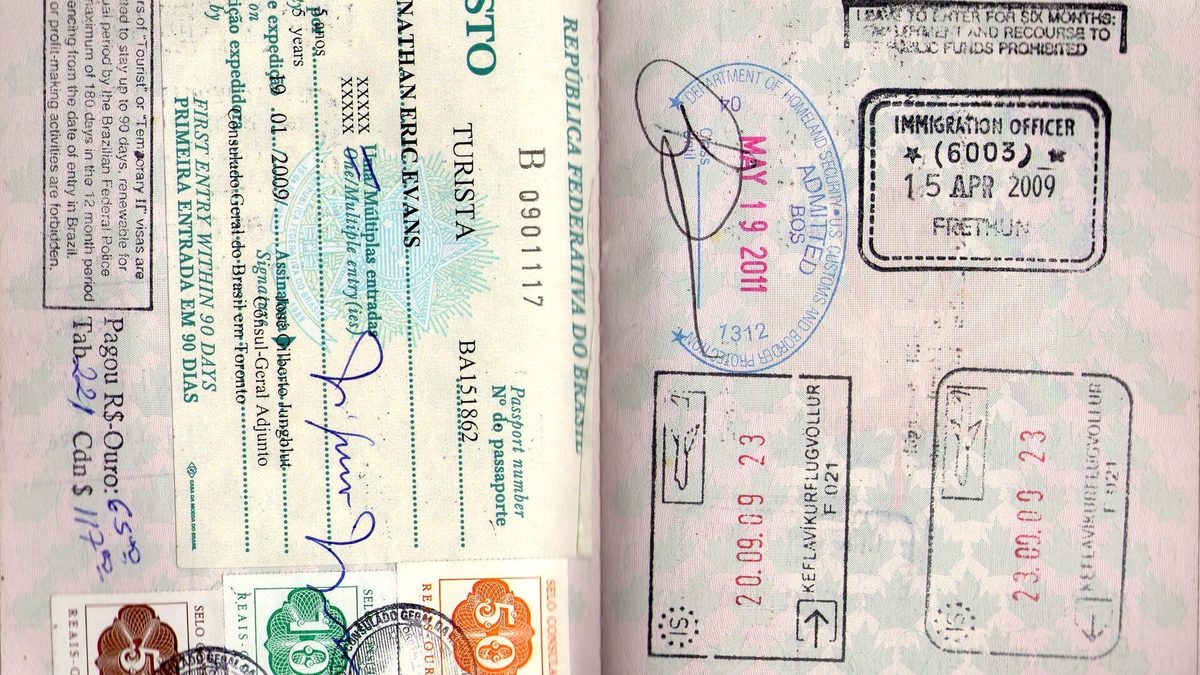
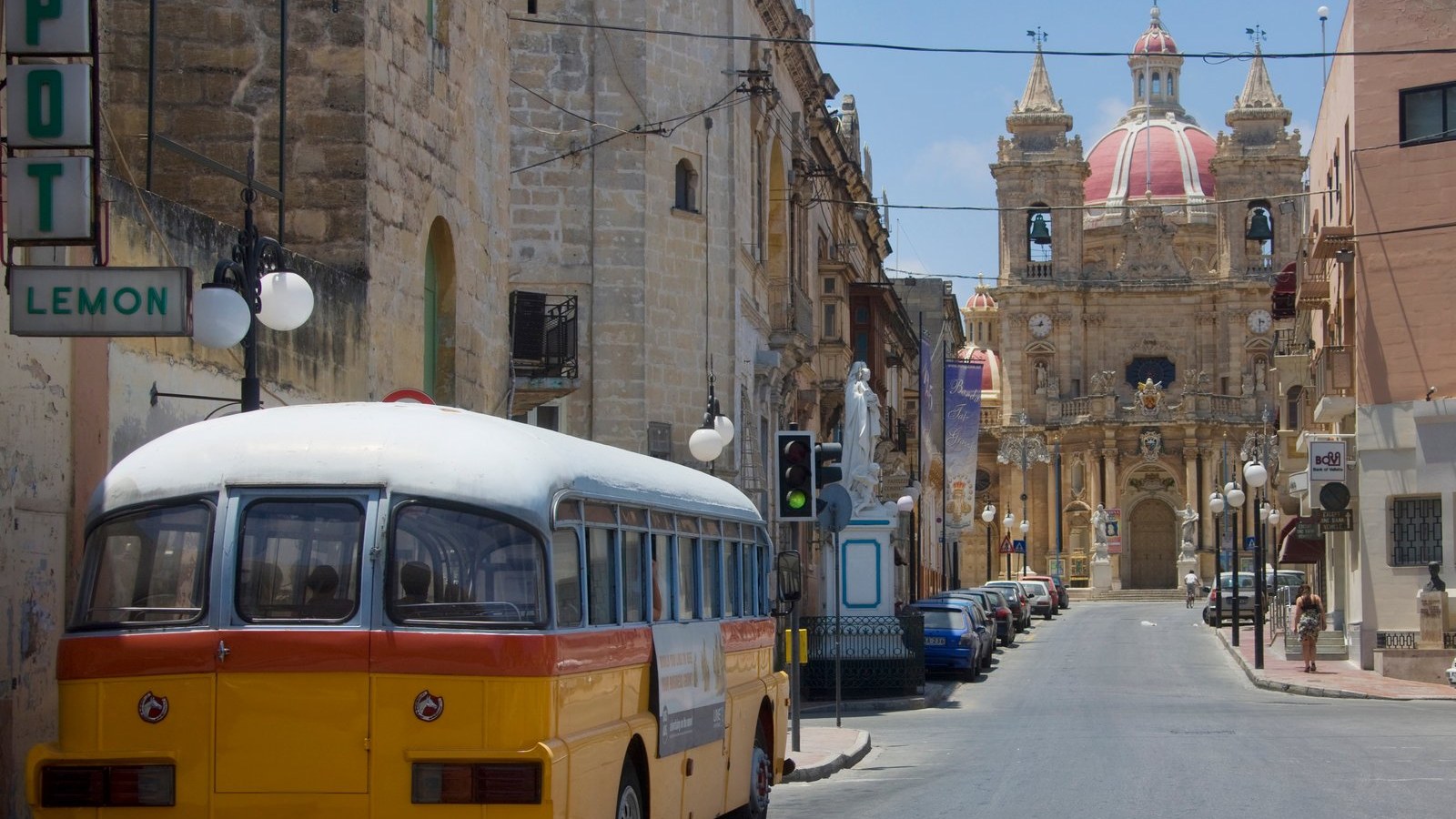
A student lands at Malta International Airport in late September with a confirmed seat at a licensed college, a Type D visa in her passport, and a room already agreed over WhatsApp. Six weeks later she is still without a bank account, still paying rent in cash, and still cannot start the part-time café job she was promised — because her landlord never registered the lease with the Housing Authority. Nothing in her file was fake. The order was simply wrong.
That is the part almost nobody explains before departure. Your Malta eResidence card, bank account and SIM are not three separate errands you can do in any order in 2027. They are a chain, and each link opens the next one. Get the sequence right and the whole thing takes a few weeks. Get it wrong and you spend your first semester queuing.
You cannot get a Malta residence permit before you fly. After arriving, you apply online through the Identità Expatriates Portal (Form CEA N.01), attend biometrics, and collect your eResidence card in person. Your registered lease comes first, a Maltese tax number (TIN) comes before any bank account, and your SIM must be registered to you with your passport.
Why can't you get your Malta residence card before you fly?
Because Malta handles the student residence permit in-country, not at an embassy. Identità — the Maltese identity agency — states plainly that applying for your initial student residence permit "involves a few steps that you need to complete after you arrive in Malta (you cannot get this permit before arriving)."
So the visa in your passport and the permit are two different things. The Type D national visa gets you through the border; the eResidence card is what lets you stay, open an account and eventually work. Two timing rules matter here. If you needed a Type D visa, apply for the permit soon after arrival so it can be processed before the visa lapses. If you happen to be visa-exempt, you must submit within 90 days of entry.
One more eligibility point that catches people out: the course must be at MQF Level 5 or higher, offered by an institution licensed by the Malta Further & Higher Education Authority, with the qualification recognised by MQRIC. Part-time courses are not eligible at all. If you are below MQF Level 5, the study permit route is not open to you in the ordinary way — and that is worth checking before you pay a deposit, not after.
What makes the lease the most important document you'll sign?
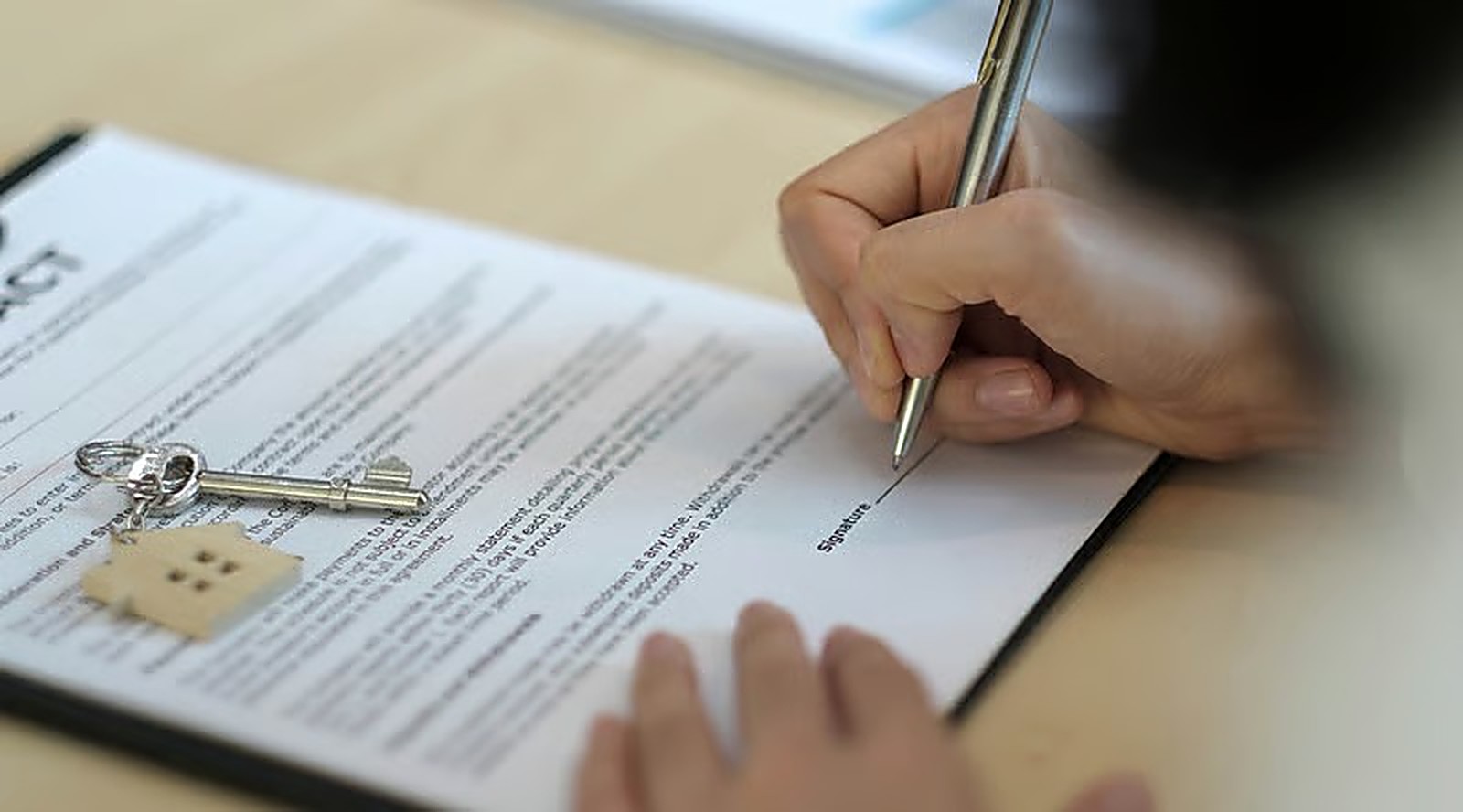
Everything downstream depends on it. Identità does not just want a rental contract; it wants a lease that Maltese law recognises. Three things are required:
- A signed lease stating the full address — building number, property name, block reference, flat number, street and locality — plus the landlord's full name and ID number.
- The Housing Authority approval for that lease. Under the Private Residential Leases Act (Cap. 604) every private residential lease must be registered, and you submit the Housing Authority's approval with your application.
- A Lease Agreement Attestation Form, completed and signed by your landlord and by a warranted lawyer, notary or legal procurator, and stamped. This is needed the first time you submit a particular lease, and again whenever you change address.
If your landlord is not Maltese, you also need proof they actually own the property. If a foreign national is sub-letting to you, the sub-letting agreement between the Maltese owner and that person has to come along too.
"Will you register this lease with the Housing Authority and sign the attestation form?" A landlord who hesitates is telling you something. A cheap room you cannot use in your permit application is not cheap — and moving later means a fresh attestation and a change-of-address notification to Identità.
How do you get the eResidence card, and what keeps you legal while you wait?
The application itself is online; only biometrics and collection are in person. Identità's own outline of the process runs like this:
- Arrive legally. You must be physically in Malta to apply — applications are handled in-country, not at embassies.
- Apply on the Expatriates Portal. Create an account, select Study – New (CEA N.01), complete the e-form, upload clear scans of your passport, acceptance letter, funds, insurance and accommodation documents, and pay online.
- Attend biometrics. Identità prompts you through the portal or by email to book a slot at the Expatriates Unit for photo and fingerprints, and to present originals if asked.
- Wait, and watch your email. Processing typically takes a few weeks. Identità may ask for more information or call you for an interview — respond quickly.
- Collect the card in person. On approval you are invited to collect the eResidence card, which shows "Study" as your purpose of stay.
Here is the reassuring part, and it is one that saves a lot of panic in October and November. If you applied while your visa or entry period was still valid, you can legally remain in Malta while the decision is pending — even if the visa itself expires in the meantime. Your application receipt and portal status are the proof that you are in process.
The card is usually valid for one year, or the length of your course if that is shorter. Multi-year degrees are renewed annually using Form CEA N.02, and you should start roughly a month before the current card expires. There is no automatic grace period after expiry, so treat that date the way you treat an exam date.
Why won't a Maltese bank open your account without a TIN?
Because they are required to identify you for tax purposes first. The University of Malta's International Office puts it bluntly in the guidance it publishes with local banks: a Tax Identification Number is a requirement by local banks for students to open a bank account. Students register through the Commissioner for Revenue's expatriate taxpayer registration and, on that form, tick the "Self-Sufficient" box under Purpose of Registration.
That single tick is the detail that sends students back to the counter a second time. It is also the reason "I'll open my account on day two" rarely works: you generally need an address, a permit application in the system and a TIN before a bank will finish onboarding you.
The banks that publish student guidance through UM are APS Bank, BNF Bank, Bank of Valletta and Moneybase, and UM notes you may approach any other local bank instead. Eligibility for a local account is usually tied to studying in Malta for more than six months.
| Step | Where | Status |
|---|---|---|
| Registered lease | Landlord → Housing Authority | Required first |
| Permit application | Identità portal (CEA N.01) | In Malta only |
| Biometrics | Expatriates Unit | In person |
| TIN | Tax office registration | Before the bank |
| Bank account | APS / BNF / BOV / Moneybase | Needs TIN |
| SIM card | Operator shop | Passport in person |
| Part-time job | Employer → Jobsplus | Licence first |
How do you get a SIM card in Malta as a Bangladeshi student?
In person, with your passport, at an operator's shop. There is no anonymous prepaid SIM in Malta: every mobile SIM has to be registered to the person using the number. Melita's own instruction is about as short as instructions get — visit a shop, bring a valid ID document, verify yourself, and you are registered. The main operators are GO, Epic and Melita.
Two practical notes. Keep your Bangladeshi number alive on a second SIM or eSIM for the first few months, because bank and university one-time passwords may still be tied to it. And do not buy a SIM registered in a friend's name to save a queue — when a bank or the university later verifies your number against your own identity, that shortcut becomes an obstacle.
Is public transport in Malta really free for students?
Travel is, once you hold a personalised tallinja card. Malta Public Transport confirms that with a personalised card you travel free on Day Routes, Night Routes and select Special Services, plus the Valletta–Sliema–Three Cities ferry and the Barrakka Lift. tallinja Direct routes and On-Demand services are not part of the free government scheme.
The Student card is for people aged 17–59 following a full-time course approved by Malta's Ministry of Education lasting more than three months, and you must provide proof of student status. Registration is online; if you do not yet have a Maltese e-ID, you upload a photo and a copy of your identity document. Cards typically arrive within two weeks. Registration normally costs €25 for Student, Adult and Gozo cards — though Malta Public Transport has run a free student registration window at the start of the scholastic year (29 September to 31 October in 2025).
Free bus travel removes a monthly commuting line from your budget entirely — and students at the University of Malta, MCAST and ITS are exempt from buying private health insurance, because those public institutions give access to public healthcare. At a private college you must buy a policy of at least €100,000 cover, valid for your whole course.
| Item | Euro | Approx. BDT | Status |
|---|---|---|---|
| tallinja registration | €25 | ৳3,550 | Free window seen |
| Bus fare with card | €0 | ৳0 | Government scheme |
| Not validating card | €50 | ৳7,100 | Penalty |
| Health cover (private college) | €100,000 | ৳1.42 crore | Minimum cover |
| Balance refund fee | €5 | ৳710 | Plus bank charges |
Converted at €1 ≈ ৳142.00 (open.er-api.com, 17 August 2026). Rates move daily — treat the taka column as indicative.
Can you work part-time, and what happens if you start without the licence?
You can, within limits, and the licence is not optional. Identità's rules are specific: after the first 90 days of your stay, students on a study residence permit may work up to 20 hours per week, and that cap is cumulative across all employers. Only students on MQF Level 5 or higher courses qualify; below that level there is no part-time work right. You must also stay a genuine full-time student, with a minimum of 15 hours of lectures a week.
Your employer must apply to Jobsplus for an employment licence for you, and you must wait until it is issued before your first shift. The licence ties you to that specific employer and job. Working without it is illegal and can lead to your student permit being revoked and removal from the country. A café that says "start Monday, we'll do the paperwork later" is asking you to risk your entire course.
Attendance matters too. Institutions are required to report students who stop attending, and around 75% attendance is the common expectation. Take the job that fits your timetable, not the timetable that fits the job.
What changed for Bangladeshi documents in 2025?
A genuinely useful change, and many agents in Bangladesh still have not updated their advice. Identità requires foreign public documents to be apostilled or legalised, and all documents to be in English or accompanied by a certified translation. On 30 March 2025 the 1961 Apostille Convention entered into force for Bangladesh, following the deposit of its instrument of accession on 29 July 2024 — the first HCCH convention Bangladesh has joined.
In practical terms, that means Bangladeshi public documents for use in Malta now sit inside the apostille system rather than the older chain of consular legalisations. It changes who stamps what, and it changes your timeline. Ask anyone advising you which route they are using for your certificates in 2027 — if the answer sounds like it was written in 2023, ask again.
Your arrival folder — keep these together from day one
- Passport valid well beyond your intended stay, with the visa and entry stamp pages
- Acceptance letter and proof of fees paid
- Signed lease with the full address and landlord's ID number
- Housing Authority approval and the stamped Lease Agreement Attestation Form
- Health insurance certificate showing name, cover amount and validity dates
- Proof of funds in the format your application requires
- Apostilled academic and civil documents, with certified English translations where needed
- Digital copies of everything, in one cloud folder you can reach from a phone
What do we actually see going wrong?
At Eduvisa the pattern is remarkably consistent, and it is almost never about grades. It is about paperwork nobody warned the student to ask for. The room agreed on a video call turns out to be an unregistered sub-let. The insurance policy bought in Bangladesh has a cover limit below the threshold, or an end date that stops short of the course end date. The passport has seven months left on it when the student flies. Each of these is trivially fixable in July and painfully expensive in October.
This is also why we stay in touch after landing rather than closing the file at visa approval. Somebody has to tell you that the lease needs an attestation stamp before you hand over three months' rent — and the person telling you should not be the landlord.
Verify before you act. The Identità study FAQ used here was last modified on 1 April 2026, and the tallinja fee and free-registration window reflect Malta Public Transport's published pages as of 17 August 2026 — the free student window may open on different dates for the 2026–27 scholastic year. Bank onboarding requirements differ between banks and change without notice, and we could not reach the tax office's registration page directly at the time of writing. Confirm current requirements with Identità, your institution and the bank before acting or paying anything.
Related guides: Part-time work rights in Malta · Student life and culture in Malta. If you are still comparing destinations, our country comparison guide puts Malta beside the alternatives. Official sources: Identità — study residence permit FAQ and Malta Public Transport — personalised tallinja card.
Land in Malta with the order already sorted
Your lease, your insurance policy, your document legalisation route and your permit timeline all interact — and they are specific to your college, your MQF level and your family's paperwork. That part cannot be answered by a blog post, and it is exactly what we sit down and work through with you. Bring your offer letter and your questions; we will map your first 30 days properly, and we will still be here when you land.
Book Free Consultation →