
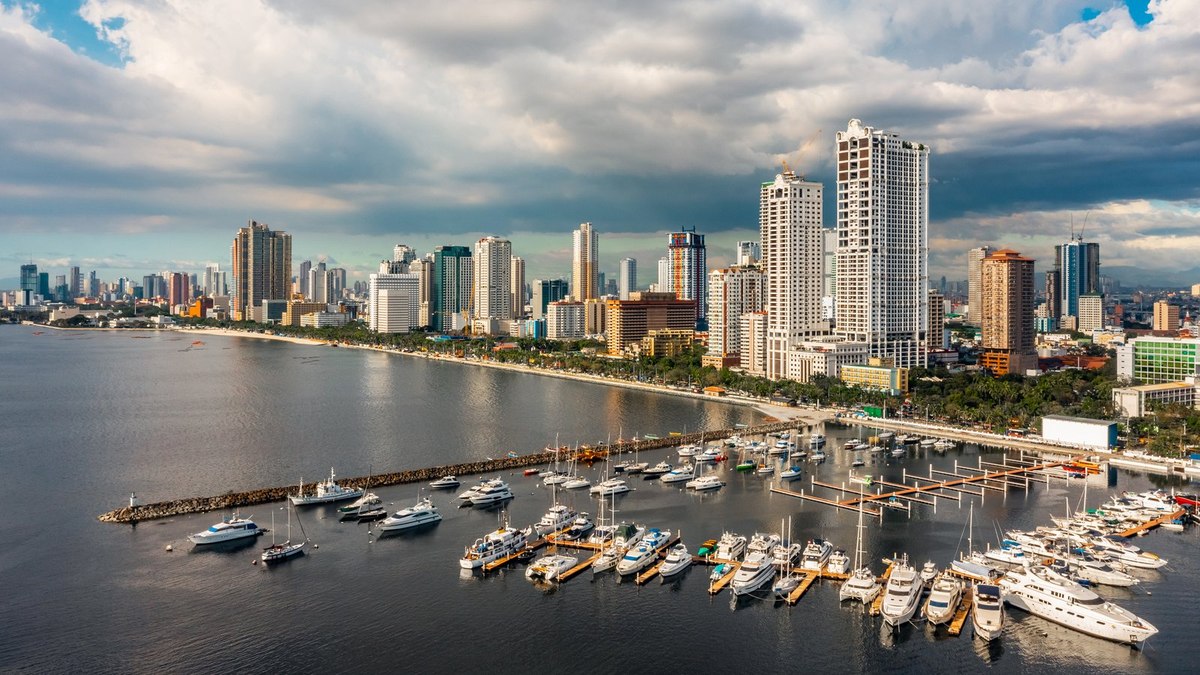
A family walks into a consultancy office in Bangladesh holding a printed brochure. On the cover: "MBBS in the Philippines — direct admission after HSC." The country on that brochure is a genuinely sensible choice. The degree promise on it is not. In the Philippines, medicine is a second degree — you finish a bachelor's first, then sit a national entrance test, and only then begin the four years of the MD. Nobody enters it straight from HSC. That single fact, published on Philippine universities' own admission pages, is the difference between a plan that works and four wasted years.
So here is what the Philippines student visa from Bangladesh actually involves for the 2027-28 intake — the 9(f) visa, the permit that is not a visa, the embassy that really does sit in Dhaka, and the one government order that contradicts what another government page tells Bangladeshi applicants.
Bangladeshi students need a 9(f) student visa for any degree programme in the Philippines. The Philippine Embassy in Dhaka is a full resident mission, so you apply in Bangladesh rather than travelling to Delhi. Bangladesh's apostille is accepted. But the Philippine "MD" is a graduate-entry degree — an HSC certificate alone will not get you into medicine.
What is the Philippines student visa from Bangladesh, and who actually needs one?
There are two separate documents, and mixing them up is the most common early mistake. The 9(f) student visa is for foreign nationals aged 18 and over enrolling in a course higher than high school — a bachelor's, a master's, a doctorate, a seminary programme. The Special Study Permit (SSP) is for people who do not qualify for the full student visa: short courses, language study, a semester of something that is not a degree.
If you are going for a degree, you want the 9(f). The Bureau of Immigration sets out the in-country sequence on its own page: submit documents to the Central Receiving Unit, pay the fees, give biometrics at the Alien Registration Division, then collect an ACR I-Card once the visa is implemented in your passport.
The ACR I-Card matters more than students expect. It is your alien registration card, it is issued only inside the Philippines, and no amount of preparation in Bangladesh substitutes for it. Biometrics are captured in Manila (or at the regional office covering your school), not in Dhaka.
Is there really a Philippine Embassy in Bangladesh?
Yes — and this is worth stating plainly, because so many cheap-destination guides quietly route Bangladeshi students through New Delhi. The Philippine Embassy in Dhaka is a resident mission with its own accredited ambassador, published on the Philippine Department of Foreign Affairs' own embassy site. You are not dependent on a non-resident mission in another country, and you should not be paying anyone to arrange an Indian visa so you can file a Philippine application.
We will be straight with you about one gap: at the time of writing, the embassy's own visa-requirements and fee pages would not load for us, so we are not quoting a Dhaka-specific visa fee or document checklist in this post. Those numbers change, they are post-specific, and publishing an Indian fee as though it were the Dhaka fee is exactly the kind of shortcut that costs families money. Confirm the current fee with the embassy directly.
Can you enter on a tourist visa and switch to a student visa later?
This is where two official Philippine sources genuinely disagree, and we would rather show you the contradiction than pretend it away.
Executive Order No. 423, which governs the entry and stay of foreign students, states that approved applicants "are required to secure their visas from the Philippine Foreign Service Post in their country of origin or legal residence, regardless of where they are at the time of application," and adds, flatly, that "conversion from other visa category to that of a student visa shall not be permitted." Read on its own, that closes the tourist-then-switch route completely.
Yet the Philippine Embassy in New Delhi publishes a page titled for exactly that conversion, stating that foreigners wishing to study "may enter the country using 9(a) temporary visitor's visa which may be converted into 9(f) student visa." Both pages are on Philippine government domains. Both are live.
An executive order outranks a mission's procedural webpage. If you enter as a tourist intending to convert, and the Bureau of Immigration applies EO 423 as written, you have paid tuition for a course you cannot legally enrol in. Ask the Dhaka embassy in writing which route applies to a Bangladeshi applicant, and keep the reply.
Why can't a Bangladeshi HSC graduate go straight into "MBBS in the Philippines"?
Because there is no MBBS in the Philippines. There is a Doctor of Medicine (MD), and it is structured the American way: a bachelor's degree first, then medicine.
Angeles University Foundation's School of Medicine states the requirement on its own admissions page — an applicant must be a "holder of any baccalaureate degree" and must have taken the National Medical Admission Test (NMAT) with a score of 40% or higher. The University of the Philippines Manila independently confirms the same structure from a different direction: its international fee schedule files Medicine under "2nd Degree Programs," grouped with Law, Veterinary Medicine and Dentistry. And Davao Medical School Foundation, quoting the Commission on Higher Education, describes the MD as "a 54-month program, excluding the baccalaureate program."
Add it up honestly. A pre-medical bachelor's degree, then the NMAT, then 54 months of MD. That is a longer and more expensive road than the direct five-and-a-half-year MBBS a Bangladeshi student would sit for in Kyrgyzstan, Russia or China — and a brochure that shows "MBBS, 5 years" beside a Philippine campus photograph is describing something that does not exist.
EO 423 requires a Certificate of Eligibility for Admission from the Commission on Higher Education only where enrolment is capped by shortage of facilities — specifically medicine and dentistry. It is a capacity rule, not a nationality rule. We found no Philippine source placing Bangladesh on any restricted-nationality list for study.
How much does studying in the Philippines actually cost?
Here we have to be careful, because the honest answer is that Philippine universities publish far less than Bangladeshi families need. What we can give you is real and university-published: the University of the Philippines Manila's Education Development Fee for non-residents. Read it for what it is — an international-student charge on top of other fees, not the whole bill.
| Level | Per semester | Summer | Residency |
|---|---|---|---|
| Undergraduate | USD 300 | USD 120 | USD 60 |
| Graduate | USD 500 | USD 200 | USD 100 |
| 2nd degree (Medicine, Law, Vet, Dentistry) | USD 400 | USD 160 | USD 80 |
Now the part other guides leave out. We checked the published fee pages of the Philippine medical schools Bangladeshi agents most often name — University of Santo Tomas, Davao Medical School Foundation, Cebu Institute of Medicine, Angeles University Foundation — and none of them publishes a full MD tuition figure we could read. UST's tables exist only as images. CIM's table has the headings but blank amounts. DMSF and AUF publish no figure at all.
So we are not printing one. Every peso figure circulating on "MBBS in Philippines" agent websites is unverifiable against the university's own page. If a consultancy quotes you a precise annual tuition, ask which university page it came from, and open that page with them.
Does a Bangladeshi apostille work for the Philippines?
It should, and this is genuinely good news. The Philippines has been a party to the 1961 Hague Apostille Convention since 14 May 2019, and it is not among the twelve states that objected to Bangladesh's accession. Bangladesh joined the Convention on 30 March 2025, which means a Bangladeshi certificate carrying an apostille from Bangladesh's Apostille Authority should be accepted without a further round of embassy legalisation.
That is a real saving in time and fees compared with the twelve objector countries — Germany, Austria, Czechia, Greece, Estonia, Belgium, the Netherlands, Finland, France, Denmark, Argentina and Lithuania — where Bangladeshi students still face the old legalisation chain. Keep in mind we are reading the Convention's mechanism here rather than quoting a Philippine agency statement about Bangladesh specifically, so ask the embassy to confirm the format it wants.
What do you prepare in Bangladesh, and what waits until Manila?
The split matters, because a document prepared in the wrong country is a document you pay for twice. Police clearance and the medical examination are home-country steps: the consular route requires a police clearance from the national police authority, generally not older than six months and authenticated, plus a medical certificate with laboratory work and a chest X-ray. Biometrics and the ACR I-Card are Philippines steps.
Document checklist
- Passport valid well beyond your intended course length
- Official acceptance letter from the Philippine institution
- Apostilled academic certificates and transcripts
- Authenticated police clearance from the national police authority
- Medical certificate with laboratory results and chest X-ray
- Proof of financial capacity to cover tuition and living costs
- Passport photographs to the embassy's current specification
- CHED Certificate of Eligibility for Admission — medicine and dentistry applicants only
- NMAT result — medicine applicants only
Can you work while studying, and can you stay after graduating?
We do not know, and we are not going to guess. We searched the Bureau of Immigration's own FAQ and the Department of Labour and Employment's alien employment pages, and found no primary source addressing employment rights for 9(f) or SSP holders, and no post-study work or stay-back route on any immigration or foreign-affairs page.
That absence is itself information. When a destination genuinely offers student work rights and a graduate route — as Malta, the UK and several EU states do — the government says so in writing. The Philippines, on the pages we could reach, does not. If a consultancy tells you that you can comfortably fund your studies with part-time work in Manila, ask them for the government page that says so.
One more gate that applies to every cheap-medicine destination, the Philippines included: if you intend to practise in Bangladesh, the BMDC Eligibility Certificate is required before you begin an MBBS or equivalent abroad, and BMDC's own requirement list asks for the Bangladesh MBBS/BDS Admission Test admit card and result sheet. Returning graduates must also pass BMDC's Registration Qualifying Examination. A degree you cannot register is not a degree you can work with.
Is the teaching genuinely in English?
Largely, yes — and this is the Philippines' strongest card for Bangladeshi students. Executive Order No. 210 establishes English as a medium of instruction from Grade 3 upward, requires not less than seventy percent of secondary instructional time in English, and encourages higher education institutions to adopt English as their primary medium. For a student who has studied in English-medium in Bangladesh, that removes the language year that Moldova, Egypt, Russia or China would demand.
We found no IELTS or TOEFL requirement stated on any immigration or CHED page we checked. Individual universities may still set their own English bar, so check the specific institution rather than assuming.
What we see at Eduvisa
The pattern we run into most often with Philippines enquiries is not a visa problem at all — it is a degree structure problem that surfaces late. A student arrives with an HSC result, a medicine ambition and a brochure, and the conversation has to start by explaining that the road is a bachelor's, then the NMAT, then the MD. Families take that news much better in a counselling room in month one than they would in month eighteen. The visa mechanics for the Philippines are comparatively humane — a resident embassy in Dhaka, a working apostille route, English-medium teaching. It is the academic planning that needs the careful hand.
Related guides: China student visa from Bangladesh 2027 · South Korea student visa from Bangladesh 2027 · also from this week's research: Egypt and Thailand, and now also Moldova. Official sources worth bookmarking: the Bureau of Immigration's 9(f) page and the Philippine Embassy in Dhaka.
Not sure whether the Philippines fits your actual plan?
The country is a reasonable choice for engineering, business, IT and nursing, and an awkward one for a student who wants medicine quickly. Which of those you are depends on your results, your budget and how many years you can give it — and that is a conversation, not a checklist. Bring your certificates and let us look at them properly with you.
Book Free Consultation →